23 November 2026
← All writingEvery Gujarati wedding ritual in order, from chandlo matli, pithi and mameru to the garba, ponkhnu, mangal fera and kansar, and how to photograph and film each one.
A Gujarati Hindu wedding usually runs over several days. Before the wedding come the chandlo matli and gol dhana, the mandap muhurat and grah shanti, the pithi, the mameru and the garba. On the wedding day there is the arrival of the groom and the ponkhnu at the door, the jaimala, the kanyadaan, the hast melap, the four mangal fera and the saptapadi, the sindoor and mangalsutra, the kansar, and the vidaai. Order and names change between families, so start your photography plan with the running order from your priest.
Ask guests what they remember from a Gujarati wedding and the garba usually comes up first. The ceremony day has its own surprises, though: a mother of the bride trying to catch the nose of the groom at the door, an antarpat cloth that hides the bride until the last second, and a game with a ring at the very end.
Memory Filming has photographed and filmed Asian weddings in London since 2000. Customs differ between Gujarati communities and households, so treat this as a guide and check the details with your own family and priest.
What are the Gujarati wedding rituals in order?
Most Gujarati Hindu weddings follow this broad order, though families add, drop and rename steps:
- Chandlo matli and gol dhana, which mark the engagement
- Mandap muhurat and Ganesh sthapana, the blessing before the wedding preparations begin
- Grah shanti, a puja for peace and good fortune
- Pithi, the turmeric ceremony at each home
- Mameru, the gifts from the maternal uncle of the bride
- Garba or sangeet, the dance night
- Jaan or varghodo, the arrival of the groom
- Ponkhnu, the welcome of the groom at the door
- Kanya aagaman and the jaimala, the entrance of the bride and the exchange of garlands
- Kanyadaan and hast melap
- Mangal fera and saptapadi
- Sindoor and mangalsutra
- Kansar and the blessings of the elders
- Vidaai and the ring game at the home of the groom
What happens before the wedding day?
The chandlo matli is a small family gathering where the father of the bride, or another elder, marks the forehead of the groom with a chandlo and gives a matli, a pot of gifts. In the gol dhana that follows, coriander seeds and jaggery are shared, and the families exchange gifts. They are small gatherings and easy to leave off the booking, which is a shame, because they often give the warmest family photographs of the whole wedding.
A few days before the wedding, the mandap muhurat begins the preparations with prayers to Ganesh at the home of each family, often followed by a grah shanti puja. Our Hindu wedding rituals guide explains how these early pujas fit the wider Hindu wedding.
What is the pithi?
The pithi is the Gujarati turmeric ceremony. A paste of turmeric, often mixed with sandalwood and rose water, is applied to the bride and groom at their own homes while the women of the family sing folk songs. Because it happens at two homes, sometimes on the same morning, you either book a team for each side or decide which one to cover in full. Our haldi and pithi guide covers how to light and plan it.
What is the mameru?
The mameru is the gift from the mosal, the family of the mother of the bride, led by her maternal uncle. It often includes the panetar, the red and white sari many Gujarati brides wear for the ceremony, along with jewellery, sweets and other gifts for the bride and her family. It is a proud moment for that side of the family and is easy to miss if nobody tells the photographer when it will happen.
Why is the garba so important?
For many Gujarati families the garba is the biggest night of the wedding. Guests dance in wide circles, often with dandiya sticks, and the evening can run longer than the ceremony itself. To cover it well, the team needs a wide view of the circles and close shots of faces mid dance, and someone has to watch for the point where the formal steps fall apart and everyone just dances. The [Wikipedia article on garba](https://en.wikipedia.org/wiki/Garba_(dance)) explains the dance, and our garba page and sangeet guide cover how to plan the night.
What happens when the groom arrives?
The jaan, or varghodo, is the procession of the groom and his family, often with a dhol. At the door the mother of the bride welcomes him in the ponkhnu with an aarti, and in many families she playfully tries to catch his nose, a reminder that he has come to ask for her daughter. In some families his feet are washed and he is offered madhuparka, a mixture of honey, curd and ghee. Our baraat guide explains how to plan for the arrival.
What are the main rituals at the mandap?
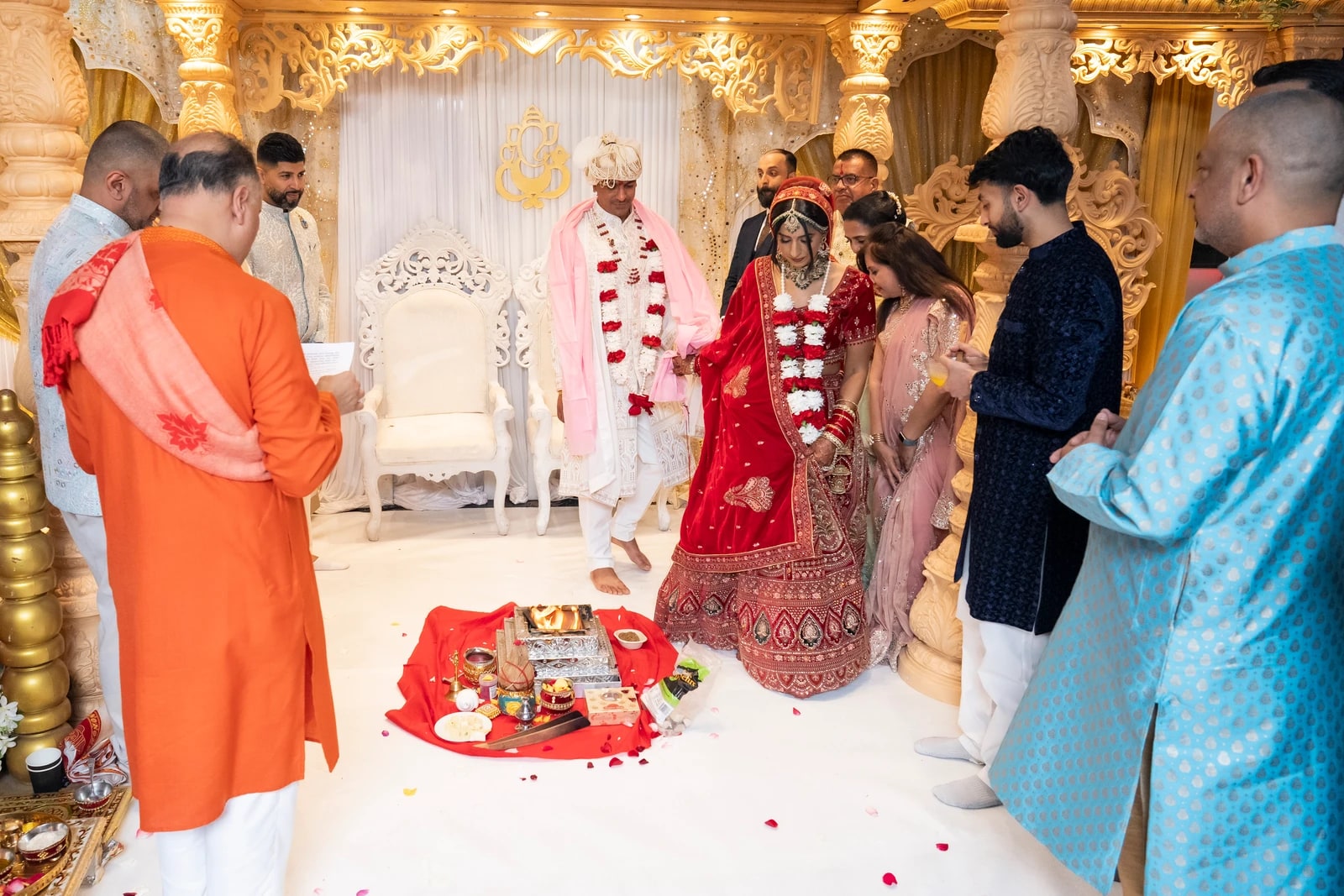
The ceremony at the mandap moves from the entrance of the bride and the exchange of garlands to the kanyadaan, the hast melap, the mangal fera and the saptapadi, and then the sindoor and mangalsutra.
- In the kanya aagaman, the bride is often brought to the mandap by her maternal uncle. A cloth called the antarpat is held between her and the groom until the right moment, and then lowered.
- The couple exchange garlands in the jaimala.
- In the kanyadaan, the parents of the bride give her hand to the groom.
- In the hast melap, the hands of the couple are joined, and the end of her sari or shawl is tied to his scarf.
- The couple make four mangal fera around the sacred fire, each for one of the aims of married life, and then take seven steps together in the saptapadi. The Wikipedia article on the saptapadi explains the seven vows.
- The groom applies sindoor to the parting of her hair and ties the mangalsutra.
- In the kansar, the couple feed each other a sweet made of wheat, and then take blessings from the elders.
Many brides change partway through, from the panetar given by her mosal to the gharchola, a red sari from the family of the groom, so ask when that will happen. Plenty of families also add the joota chupai, when the sisters of the bride hide the shoes of the groom.
What happens at the vidaai?
The vidaai is the farewell of the bride from her family. At the home of the groom she is welcomed in, and in many families the couple play a game to find a ring in a bowl of milk or water, sometimes called aeki beki. Whoever finds it first is said to rule the house. Our vidaai guide covers the farewell in more detail.
How should a Gujarati wedding be photographed and filmed?
Treat the garba as a main event, ask your priest for the running order of the mandap, and tell your team about the small family moments that happen away from the stage.
- Share the dates and addresses for the pithi, mameru and garba, as well as the wedding day.
- Plan two cameras for the ponkhnu, the antarpat and the hast melap, so the faces of both families are covered.
- Tell your team when the bride will change from the panetar to the gharchola.
- If the pithi of the bride is a gathering of the women of the family, you can ask for a female photographer. Memory Filming provides all female photo and video teams on request for ladies only functions.
Our Gujarati weddings page explains how we cover the full week, and our guide to two wedding photographers vs one explains when a second camera pays for itself.
Questions couples ask
What is the order of a Gujarati wedding?
Broadly the chandlo matli and gol dhana, the mandap muhurat and grah shanti, the pithi, the mameru and the garba, then on the day the jaan, ponkhnu, jaimala, kanyadaan, hast melap, mangal fera, saptapadi, sindoor and mangalsutra, kansar and vidaai.
How many pheras are there in a Gujarati wedding?
Usually four mangal fera around the sacred fire, followed by the saptapadi, seven steps taken together.
What is the ponkhnu?
The welcome of the groom at the door by the mother of the bride, with an aarti, and in many families a playful attempt to catch his nose.
What is the mameru?
The gifts from the family of the mother of the bride, led by her maternal uncle, often including the panetar sari she wears for the ceremony.
What is the difference between the panetar and the gharchola?
The panetar is the red and white sari given by the maternal side of the bride. The gharchola is a red sari from the family of the groom, often worn later in the ceremony.
Is the garba part of the wedding?
For many Gujarati families, yes. It is often held a night or two before the wedding and is usually the largest party of the week.
Planning your Gujarati wedding?
Tell us your dates, your venues and your running order and we will let you know whether we are free, and plan the photography and film around your rituals and your garba.