Nikkah Photography & Videography London
Twenty-five years filming Nikkah and Muslim wedding ceremonies across London and the South East with discreet, culturally sensitive coverage.
The work
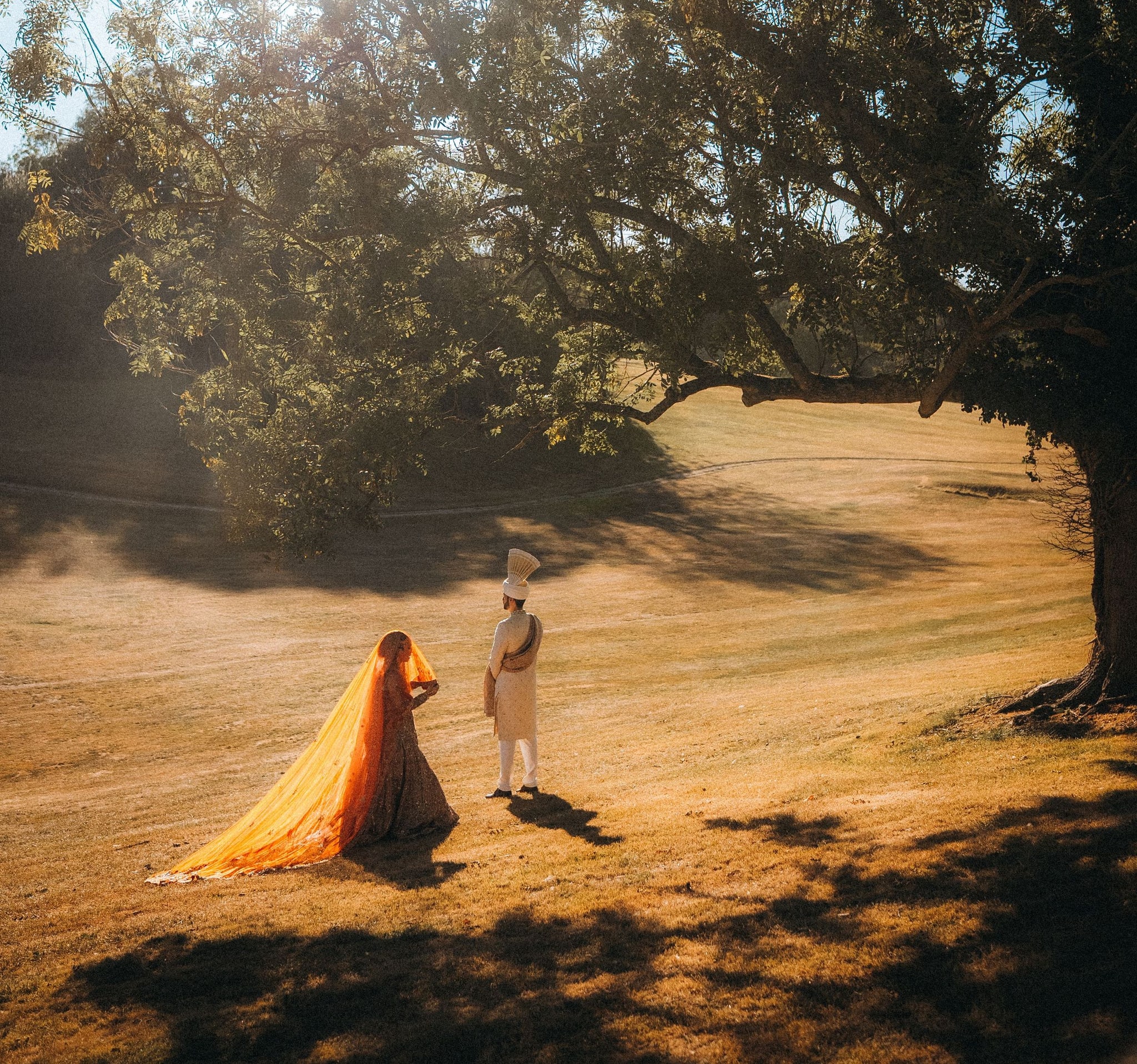
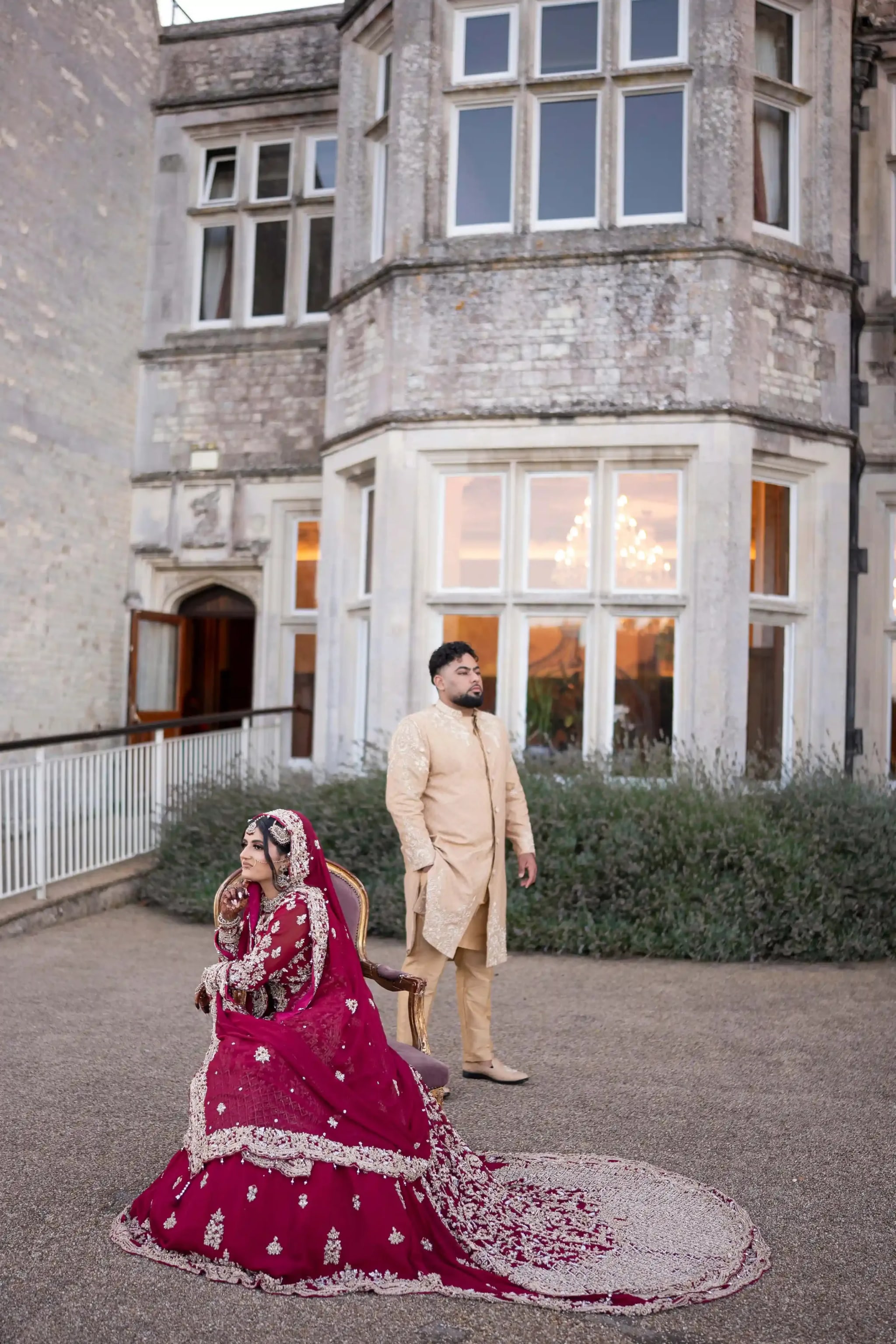
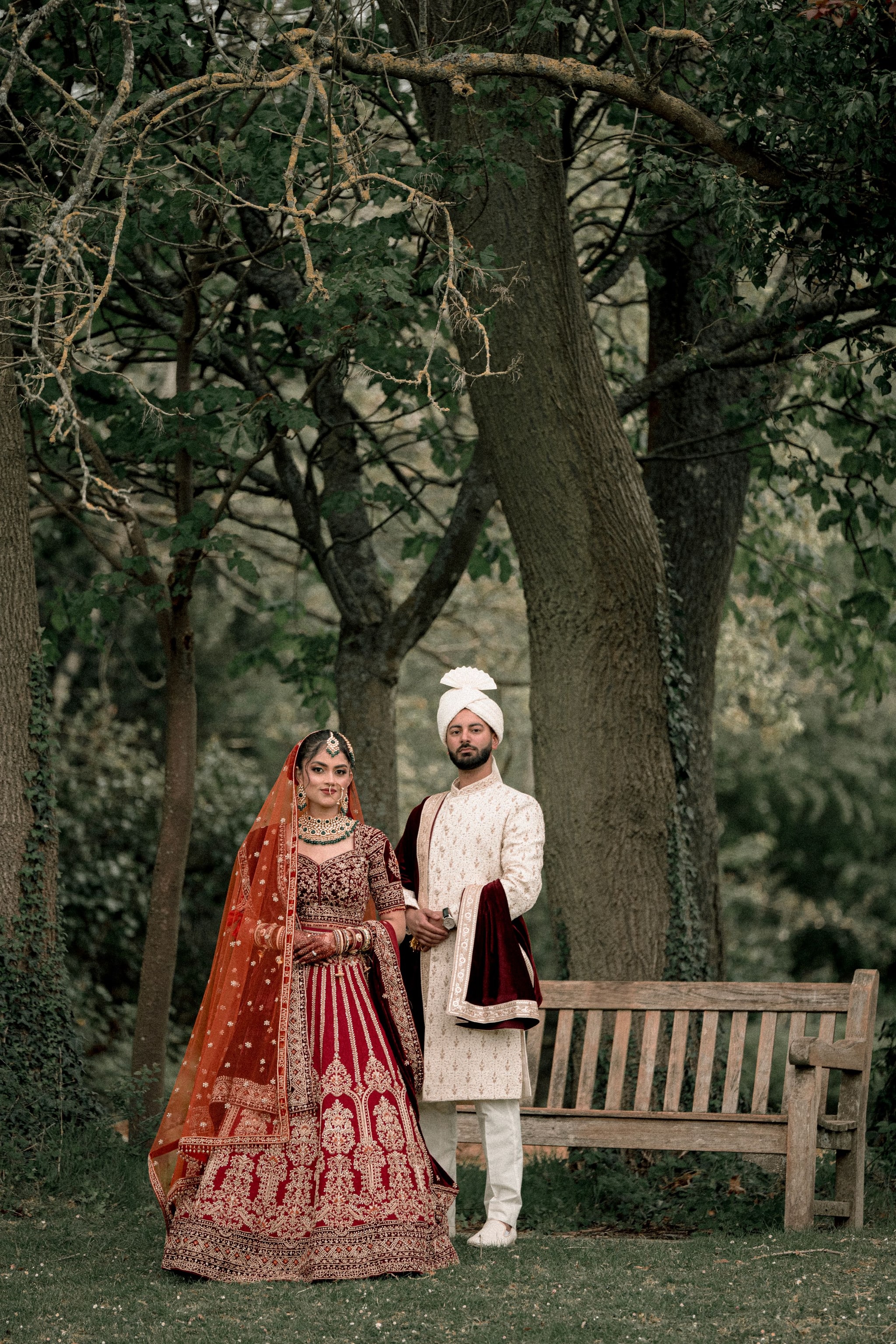
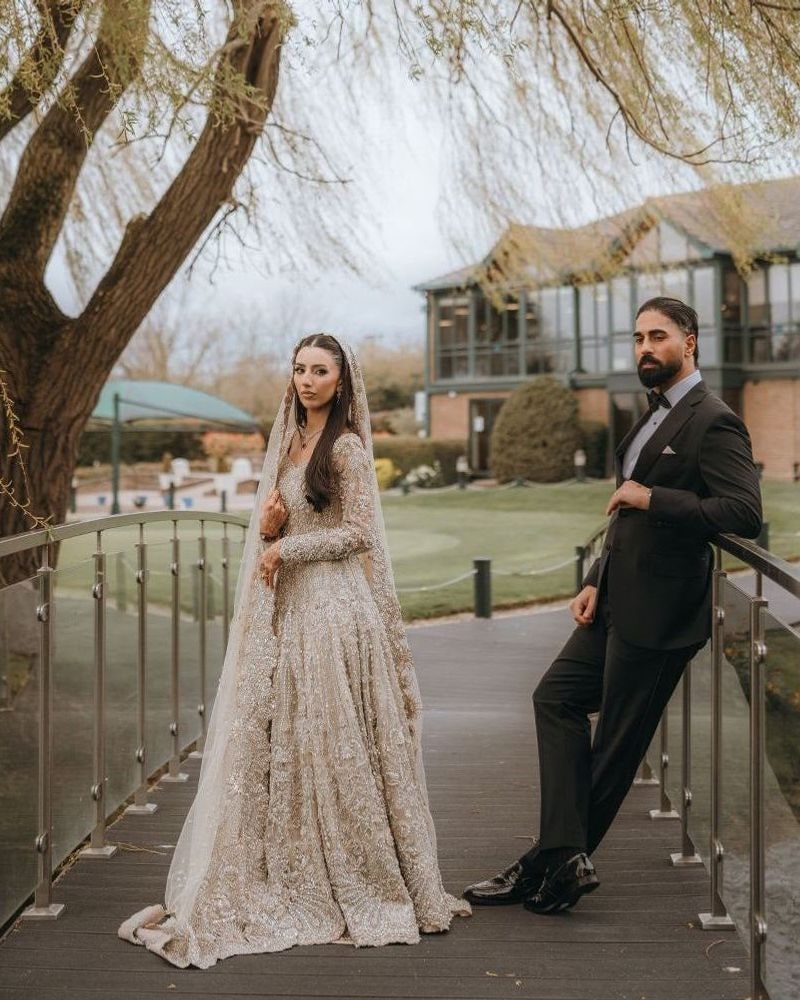
Recent Muslim films, shot and graded in house.
The Muslim wedding
The Nikkah is a contract, not a performance. The qubool hai is said once, quietly, and it is the whole marriage. Everything before it is welcome, everything after it is celebration. Miss it and there is nothing to go back for.
We have filmed it for twenty-five years, from mosque prayer halls in East London to marquees in the Home Counties. We know it is spoken softly, that the Wali answers for the bride, and that the room does not stop for a camera. So we work from the back, on long lenses, and let it happen once.
Order of service
The Nikkah
The quietest three minutes of the whole day.
- Where
- A mosque prayer hall, a venue's prayer space, or the main hall, often with separate seating for men and women. The Imam or Maulvi presides.
- How long
- 20–40 minutes
- 01
Khutbah al-Nikah
The Imam opens with Quranic verses and the marriage sermon. It sets the register for the room. We are already in position by now, not walking in during it.
- 02
Mahr
The groom's gift to the bride is stated aloud. A short, formal moment we hold on the couple, because it is the first thing spoken that is specifically theirs.
- 03
Ijab & Qabul
ایجاب و قبولThe binding momentThe Wali offers, the groom accepts, asked up to three times so the consent is unmistakable. This is the marriage. There are no exchanged vows; there is this. We shoot it on a long lens from the back so nothing is repositioned and nobody is asked to say it again.
- 04
Signing the Nikahnama
The couple, the Wali and two witnesses sign the contract. The legal spine of the day. We cover the pen, the signatures and the witnesses without crowding the table.
- 05
Dua
The closing prayer for the couple, and the room answers ameen. We hold on the faces here. It is usually the moment the weight of it lands.
- 06
Arsi Mushaf
Often the couple's first look at each other as husband and wife, in a mirror. Private, brief, and the most honest reaction of the day. We are at distance for it.
Before the Nikkah
Most of a Muslim wedding is the days around the contract. We staff for all of it.
- 1–3 weeks before
Mehndi
Henna, music, the loudest night of the week. Colour and candids. We shoot it as a party, not a portrait session.
- days before
Mayoun
Quieter, at home. Turmeric and blessings from the elders. The intimate one.
- morning of
Baraat
The groom's procession and the welcome at the door. Two operators. One moving with the arrival, one holding the greeting.
- same night or next day
Walima
The reception the groom's family hosts, 200 to 400 guests, speeches, the announcement to everyone who wasn't in the room.
Twenty-five years in the room
What we get right
The things a crew that hasn't filmed a Nikkah before will get wrong.
We know the Wali speaks, not the bride
The offer comes from the bride's guardian and the acceptance from the groom. We frame the exchange knowing where it is coming from, so the binding moment is never off-camera on the wrong face.
We clear the mosque's rules first
Photography policy inside a prayer space varies from one mosque to the next, flash, positioning, whether the ceremony can be filmed at all. We contact the venue before the day, not at the door.
We shoot the contract, not a re-enactment
The Ijab-Qabul happens once. We are set for it in advance on long glass, so there is never a reason to ask the Imam or the couple to repeat it for the camera.
We respect the separation
Where men and women are seated separately, we position and staff for it rather than cutting across the room. A second operator means both sides are covered without anyone breaking the arrangement.
Questions
Before you ask.
Can you film inside the mosque?
Usually, but it depends entirely on the mosque. Some allow full coverage of the Nikkah, some restrict flash or positioning, some ask that the prayer space isn't filmed at all. We contact your mosque in advance, agree what is permitted, and plan the coverage around it, so there are no surprises on the day.
How long is a Nikkah?
The contract itself is short, usually 20 to 40 minutes from the opening sermon to the closing dua. The Ijab-Qabul, the binding moment, is only a couple of minutes inside that. Almost all of the day's length is the events around it: the Baraat, the Walima, the pre-wedding nights.
Do you cover both the Nikkah and the Walima?
Yes, whether they are the same evening or on different days. Most of our Muslim wedding coverage is multi-day, Mehndi, Baraat, Nikkah and Walima, cut into one film with one grade across all of it.
Will you get the Baraat if it's a moving procession?
Yes. We put one operator with the procession and one already at the venue holding the welcome, so the arrival is covered from both ends rather than from a car window.
Can we have a highlight film ready for the Walima?
We offer a same-day edit, a short teaser cut during the day and shown at the reception that evening. The full film still takes several weeks; the same-day piece is a highlight, not the finished edit.
Enquire
Is your datestill free?
Tell us the date and the venue and we will come back within one working day with availability, a crew size and a straight price for your muslim film, no consultation call required first.