22 November 2026
← All writingHow a Muslim wedding is filmed in London: the nikkah with clear sound, mosque permissions, segregated halls, music or no music, privacy, and the walima film.
Muslim wedding videography in London usually means filming the nikkah with steady cameras and clear sound, then the walima with more movement and wider shots, and sometimes the mehndi, baraat and rukhsati as well. The decisions that matter most come before the day: what the mosque or imam allows, how segregation will work, whether the film has music, and who will see it.
Filming a Muslim wedding is a different job from filming a reception. The most important minutes of the day are often the quietest: the reading of terms, the mehr confirmed, the bride asked for her consent, sometimes through a representative in another room. A camera that moves too much, or poor sound, and those minutes are gone from the film. Then, an hour or a day later, the walima arrives with a full hall, an entrance and family everywhere, and the film has to change pace completely.
Memory Filming has filmed Asian weddings since 2000, including many nikkahs and walimas in London and beyond. Customs vary between families, schools of thought and mosques, so read what follows as questions to settle with your imam, your venue and your videographer rather than as rules.
What does a Muslim wedding videographer film?
Most Muslim wedding films cover two main chapters: the nikkah, filmed calmly with the focus on the contract and consent, and the walima, filmed as a celebration with entrances, family and speeches. Many families add the mehndi or dholki, the baraat and the rukhsati, which can fall on the same day or across several days.
A typical plan looks like this:
- The nikkah: the imam, the khutbah or sermon, the reading of terms, the mehr, the consent of the bride and groom, the signing, and the duas afterwards.
- The moments after: families embracing, sweets passed round, the first photographs of the couple together.
- The walima: the couple entering, the stage, family greeting them, speeches, and the room as it fills.
- Optional events: the mehndi, the baraat and the rukhsati, which our Pakistani wedding videography guide covers in detail.
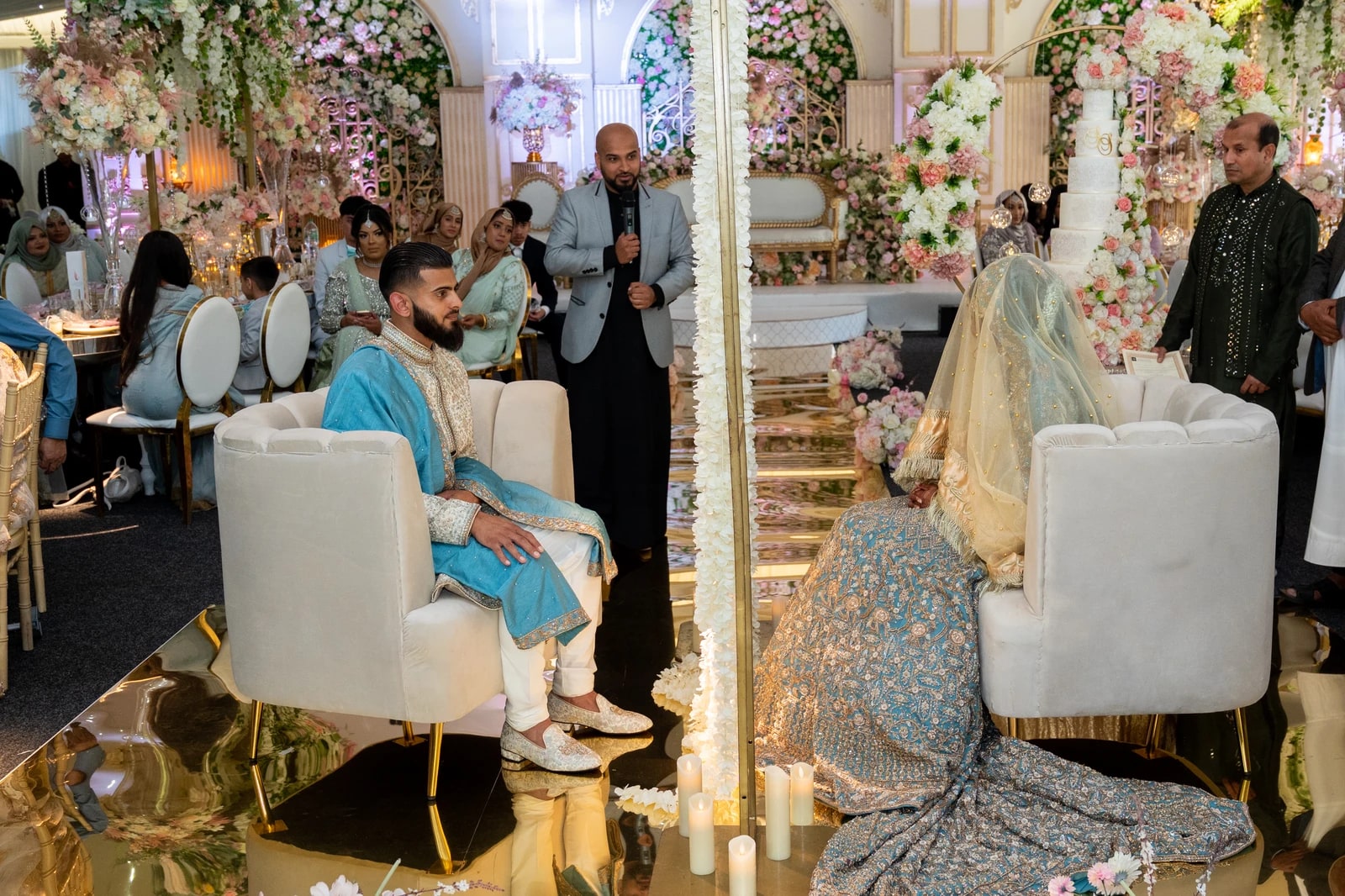
At the wedding of Usama and Uroosa, the nikkah filled a whole room before the walima even started, and the film followed the procedural moments that carry the weight: the terms, the mehr and the consent of the bride, sometimes given through a representative in the next room. We kept the cameras steady and let the ceremony set its own pace.
How do you film a nikkah respectfully?
Film the nikkah with as little movement as possible, with microphones placed before it starts, and with camera positions agreed with the imam in advance. The nikkah is a religious contract. The job is to record it clearly and leave the imam in charge.
In practice that means:
- Asking the imam or the mosque where cameras may stand, and whether filming is allowed at all during the sermon or the recitation.
- Placing a small microphone near the imam and the couple, because the words of the contract and the consent are the heart of the film and room sound alone rarely captures them.
- Keeping cameras on tripods or held still, with no lights pointed at faces during the ceremony.
- Dressing modestly, with the crew covering their heads or removing shoes wherever the mosque asks.
- Staying out of the line between the imam, the couple and the witnesses.
At the Mandarin Oriental Hyde Park wedding of Mehreen and Hasnat, we filmed the nikkah with minimal camera movement and clear audio, so the reading of terms and the exchange of consent carried the moment on their own. The mood shifted afterwards, with families greeting each other and sweets shared, and the film caught that as it happened rather than staging it again.
Our guide to nikkah photography explains the ceremony from the camera side in more detail.
Can you film a nikkah in a mosque?
Often yes, but it depends on the mosque. Some welcome photography and filming of the nikkah, some allow it only in a side room or after the sermon, and some do not allow cameras in the prayer hall at all. Ask the mosque office or the imam weeks before, not on the morning, and pass the answer to your videographer.
Remember too that a nikkah on its own does not always create a legal marriage in England and Wales. Many couples add a civil ceremony at the register office, which you may also want filmed. GOV.UK explains the legal steps, and our guide to Muslim wedding venues in London covers what that means for choosing a venue.
How is a segregated Muslim wedding filmed?
When men and women are seated or hosted separately, one camera team cannot cover both sides, so plan the crew around the segregation before you book. A male videographer usually cannot work on the women side, and many women prefer not to be filmed by a man at all.
Talk through the layout with your videographer: where the partition is, which side the stage faces, where the nikkah takes place, and whether the bride joins the women or stays apart until the walima. If the women of the family would prefer female crew, ask for a female photographer and ask what can be arranged for filming the women side. Our guide to female photographers for segregated weddings explains how the two teams work side by side.
Should a Muslim wedding film have music?
This is a family decision, and there is no single answer. Some couples want a film with no music at all, using the natural sound of the day: the nikkah, the duas, the speeches and the noise of the walima. Some choose vocal only nasheeds with no instruments. Others are happy with instrumental music, and some want songs from the mehndi or the dhol of the baraat to carry the film.
Tell your videographer what you want before the edit starts, and say whether the answer is different for each event. A nikkah film with no music and a mehndi film with dhol can sit side by side. If you choose a particular track, check with your videographer that it can be used.
Who sees the film, and how private is it?
Agree before the wedding who will see the film and where it may be shared, especially if any women would prefer their faces not to be seen by men outside the family. Many Muslim families keep the full film private and share only a short version.
Questions to settle with your videographer:
- Will the film be shared by private link, and can it be password protected?
- Can footage of the women side be kept out of any version that men outside the family will see?
- May the videographer use any of it on social media or its website, and with whose permission?
- Can guests who do not want to be filmed be kept out of the edit?
Put the answers in writing. Planning the edit around them is far easier than taking footage out afterwards.
How does the walima film differ from the nikkah?
The walima is the celebration, so the film opens up: wider lenses, more movement, the room filling, the couple walking in and the family coming to the stage. Entrances matter at a walima, so tell your videographer what will happen behind the doors and when. At Ditton Manor, Moazzam and Zoya held the nikkah in one room and the walima in a larger hall that evening, and we kept the nikkah steady before matching the energy of the walima with wider shots and more movement. Our walima photography guide covers how to plan the reception.
Plan the schedule around prayer times too. A winter walima that starts in the afternoon can run through Maghrib and Isha, so agree when the cameras pause and where the couple will be.
How do you choose a Muslim wedding videographer in London?
Ask to see complete films of Muslim weddings as well as short highlight reels, and listen carefully to the sound of the nikkah in them. Then ask:
- How many Muslim weddings have you filmed, and for which communities?
- Who will film on the day, and is it the person I am speaking to?
- How will you record the sound of the nikkah?
- How will you cover a segregated hall?
- Can the film have no music, or vocal only nasheeds?
- How will the film be shared, and who will have access?
- Which events and hours are included, and what will I receive?
Our wedding videography page explains how we film, and our guide to Asian wedding photography prices in London covers budgeting for photography and film.
Questions couples ask
How long is a Muslim wedding film?
That depends on how many events are filmed and what you ask for. Many couples choose a short highlight film to share and a longer film that keeps the full nikkah, the speeches and the walima. Agree the lengths with your videographer before the edit.
Can a male videographer film a nikkah?
Often yes, when men and women are together or when the nikkah takes place on the side of the men. In a fully segregated wedding a male videographer usually cannot film the women side, so female crew are needed there.
Can a nikkah be filmed in a mosque?
Many mosques allow it with conditions, and some do not allow cameras in the prayer hall. Ask the imam or the mosque office well before the day.
Should a Muslim wedding video have music?
That is up to the couple and their families. Options include natural sound only, vocal only nasheeds, or instrumental music, and the choice can differ between the nikkah and the walima.
Do we need a separate videographer for each event?
Not usually. One team can film the nikkah, the walima and the other events, provided they are free on every date and have enough crew for a segregated hall.
How private can a Muslim wedding film be?
As private as you need. Agree before the day how the film is shared, whether it is password protected, and whether footage of the women side stays out of any version shown more widely.
Check your dates with us
Tell us your dates and events and we will let you know whether we are free, and how we would film your nikkah and walima.
Related pages and guides
- Nikkah photography: capturing a Muslim ceremony respectfully
- Walima wedding photographer: what we capture
- Pakistani wedding videography: mehndi, baraat and rukhsati
- Muslim wedding venues in London
- Female wedding photographers for segregated events
- The complete guide to South Asian wedding videography
- Muslim weddings
- Wedding videography