26 November 2026
← All writingHow to plan civil wedding photography and videography around a nikkah, Anand Karaj or Hindu ceremony: timing, registrar rules, the moments to cover and the day.
Many Asian couples in the UK hold a short civil ceremony as well as their nikkah, Anand Karaj or Hindu ceremony, either on the same day or weeks apart. The civil ceremony is quick, quiet and easy to under plan, but it holds the vows, the signing and often the only moment both families see the couple in Western dress. Tell your photographer and videographer when and where it is, how long it lasts, and what the registrar allows, so it gets the same care as the rest of the wedding.
A civil ceremony at a register office or a licensed venue can be over very quickly, and that is why it gets missed. The family is focused on the bigger day, the photographer is booked from the afternoon, and the vows happen with a phone held up from the second row.
Memory Filming has photographed and filmed Asian weddings in London since 2000. This guide covers how civil wedding photography and videography fit around a religious ceremony, what to plan, and what registrars usually ask of photographers and filmmakers.
Why do Asian couples hold a separate civil ceremony?
In England and Wales, a marriage is registered through the civil process: you give notice at your local register office, and the ceremony takes place with a registrar or another person authorised to register it. Many couples hold a civil ceremony to register their marriage legally and then celebrate with their nikkah, Anand Karaj or Hindu ceremony, especially when the religious ceremony takes place somewhere that is not registered for marriages.
The GOV.UK guidance on marriages explains how to give notice. You name your venue when you give notice, so choose the venue first. Your register office will confirm what applies to you and your ceremony.
When does the civil ceremony usually happen?
There are two common shapes. In the first, the civil ceremony takes place in the morning or early afternoon, often at the same licensed venue as the reception, followed by the cultural ceremony or the celebration. Several of the venues we have filmed at are licensed for civil ceremonies, including Grand Sapphire, Ditton Manor and Three Rivers Golf and Country Club.
In the second, the couple holds a small civil ceremony at a register office with close family, days or weeks before the main wedding. It is easy to treat this as paperwork, but it is still the day you became married in law, and families often want it remembered.
What does a photographer need to know about a civil ceremony?
Most of the planning comes down to timing, the registrar and the room.
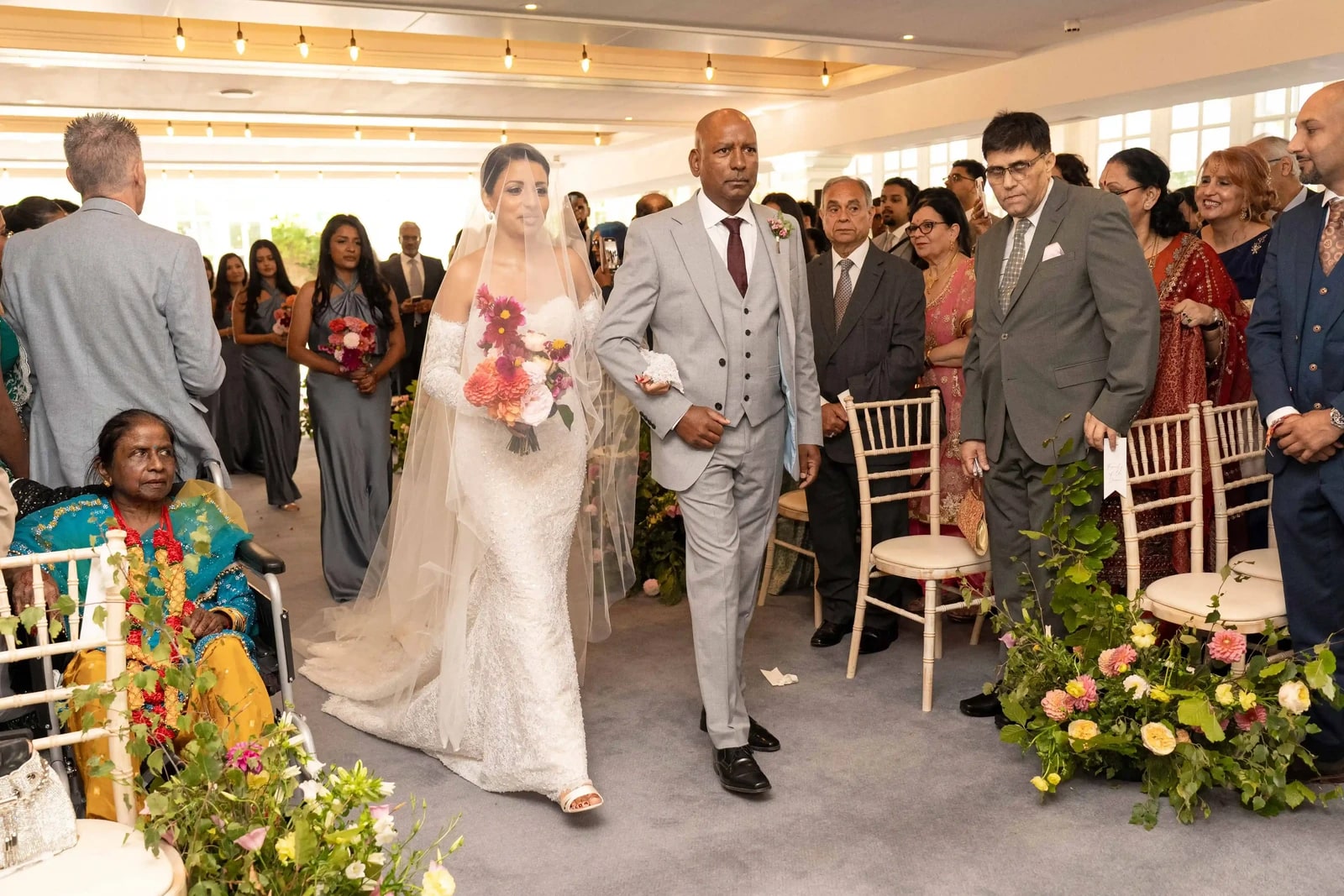
Civil ceremonies are short and run to a booked slot. Your photographer should arrive early enough to cover the arrivals, the family waiting and the couple walking in, because there is no time to catch up once the ceremony starts.
Registrars often allow photographs and filming, but many ask the crew to stay still during the legal part of the ceremony and some limit where cameras can stand. Ask the registrar or venue at your booking, and share the answer with your photographer.
Register office rooms can be small, with little space to move. A wide lens, a second camera at the back and clean sound for the vows matter more here than at a large hall.
What moments should be covered?
A civil ceremony has a fixed shape, which makes it easier to plan than most of the wedding day:
- the arrival of the couple and the families
- the walk in, often with a parent
- the vows and the exchange of rings
- the signing of the register, with the witnesses
- the walk out, and the first photographs as a married couple
- a few family groups outside, before everyone moves on
At the civil ceremony of Maidah and Maahi, that fixed shape let us plan camera positions precisely. One camera stayed on the couple and a second held the wider room, the guests and the aisle, with the steadiest framing kept for the vows.
How does it fit with the rest of the wedding day?
When the civil ceremony and the cultural ceremony fall on the same day, the change between them is a moment of its own. At the wedding of Aaron and Sahra at Hampton Court Palace, the civil ceremony with its vows and ring exchange came first. Then came a change of outfits, Aaron into a sherwani and Sahra into red, and a different rhythm and set of angles for the rest of the day.
If both happen on one day, build time for the outfit change into the running order, and tell your photographer and videographer which parts each ceremony includes. Our guide to how many hours of coverage you need helps you work out the day.
Do you need a photographer and a videographer for a short civil ceremony?
Not always. For a small register office ceremony with close family, one photographer can cover it well. If the vows matter to your family, and they usually do, film is the only way to keep the sound. Many couples add the civil ceremony to the coverage of their main wedding rather than booking it separately. Our page on photography and videography together explains how one team covers both.
Questions couples ask
Can we take photos during a register office ceremony?
Usually yes, but many registrars ask photographers to stay still during the legal part and some limit where they can stand. Ask the register office when you book.
How long does a civil ceremony take?
It depends on the register office or venue. Ask how long your slot is, and plan for the arrivals before it and the photographs after.
Should the civil ceremony and the nikkah be on the same day?
That is up to you. A same day plan keeps everyone together, while a separate day keeps the civil ceremony small and relaxed. Either works for photography if the timing is shared in advance.
What should we wear for the civil ceremony?
Whatever feels right. Many couples wear Western dress for the civil ceremony and change into traditional outfits for the religious ceremony, which gives two very different looks in the photographs.
Can the same team cover the civil ceremony and the main wedding?
Yes, and it helps. The team already knows the families and the plan, and the photographs and film look consistent across both.
Do we need witnesses for the photos?
The register office will tell you what it needs for the ceremony. For the photographs, plan a moment with the witnesses at the signing, because families often want it.
Planning your civil ceremony coverage?
Tell us your dates, your venues and your ceremonies and we will reply within one working day with availability and an itemised quote.