17 October 2026
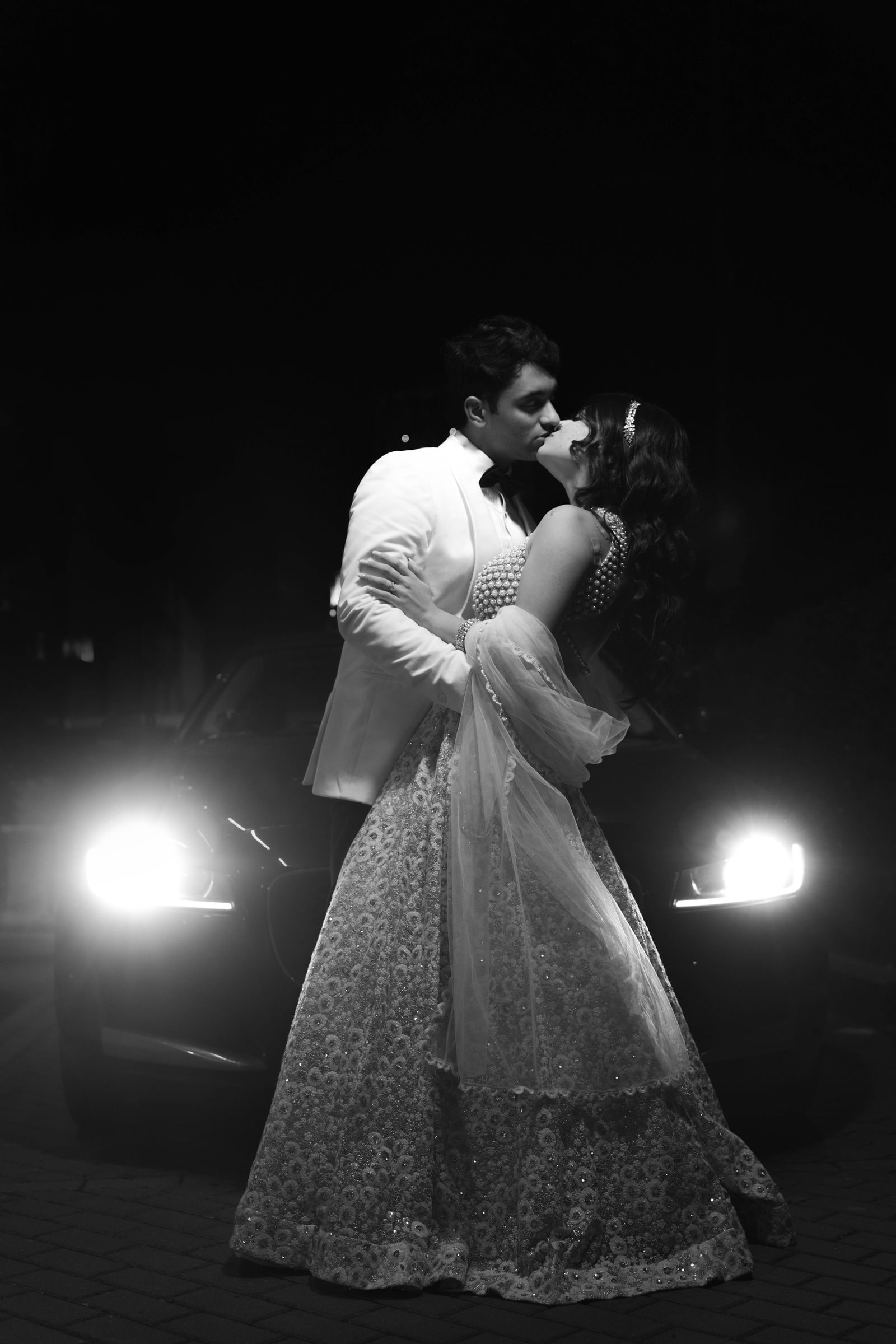
← All writingA night wedding photoshoot is a short portrait session, usually 5 to 10 minutes, taken after sunset or later in the evening with controlled flash or continuous light. The photographer lights the couple away from the party, then you return to your guests. It works in any season, but it needs a few minutes planned into the evening.
Daylight gets most of the attention in wedding planning. Golden hour, the ceremony, the group photos on the lawn. The evening tends to get whatever is left over, and that is a shame, because a good night wedding photoshoot gives you something no daytime frame can: a few quiet minutes alone, with the venue glowing behind you and the party still going.
This guide explains how night wedding photos work in the UK, when to take them, how long they take, what the lighting involves and what to ask a photographer before you book. We are Memory Filming, a London studio that covers Asian and multicultural weddings, so much of what follows comes from late receptions, mehndi nights and walima dinners as much as from English country houses.
What people mean by a night wedding photoshoot
Search for it and you will find two different things under the same name. The first is a portrait session on the wedding night itself, taken once it is dark, while the evening carries on without you. The second is a separate session at night before or after the wedding, often an engagement shoot in a city with street lights and reflections on wet pavement.
This guide is mostly about the first. If the second is closer to what you want, our pre wedding photography page explains how those sessions run.
When is the best time for night wedding photos in the UK?
The best time for night wedding photos is usually from shortly after sunset until the party is in full swing. The sky holds some deep blue for a while after the sun goes down and the venue lights begin to show. Later in the evening any time works, because the photographer supplies the light.
The season changes everything. In London the sun sets at around 9.20pm at midsummer and around 3.55pm in late December, and you can check the exact time for your date on timeanddate. A June wedding reaches darkness well after the speeches, so night portraits tend to fit after the first dance or during a natural pause in the dancing. A December wedding is dark before the wedding breakfast starts, which flips the problem: you have night light early and almost no sky.
From October to April the sun can drop before dinner ends, so a short break during the meal may be the only way to catch any colour in the sky. If you are still building your schedule, our 18 month Asian wedding photography timeline shows where evening coverage fits around the other parts of the day.
Some photographers leave night portraits until the end of the evening, so the album closes on them. That can work, but people are tired by then and guests start leaving. We would rather take them before the dance floor peaks, when everyone still looks fresh and nobody is watching for a taxi.
How long do night wedding photos take?
Most night portrait sessions take between 3 and 15 minutes, depending on the photographer and the look you want. Add a few minutes for walking to the spot, so expect to be away from the party for roughly 10 to 15 minutes in total.
A good photographer builds the lighting before coming to collect you. The stand is up, the flash is tested and the position is chosen while you are still dancing, so your time is the portrait itself and not the setup. Ceremonies and speeches normally stay flash free, and many venues insist on it, so night lighting belongs to the evening only.
Some effects need more stillness. A light painting frame, for example, can need you to hold still for around 10 seconds. Tell your photographer in advance if you want something like that so they bring the right tools.
How the lighting works, and why a phone torch will not do it
At night there is very little natural light, so the photographer brings it. The usual method is off camera flash: a flash unit on a stand, away from the camera, firing through a softbox. The softbox spreads the light so skin looks soft and the light falls off gently into shadow. Flash fired straight from the camera looks flat and hard, which is the look most couples are afraid of.
The skill is in the balance. The camera is set to record the glow behind you, whether that is fairy lights, lit windows or the last of the sky, and the flash then lights the two of you. A slower shutter lets the background register while the flash freezes you, a technique called dragging the shutter. Coloured gels over the flash can match or contrast with the background. Outdoors, stands must be weighted against wind.
One experienced wedding photographer, Michael Anthony, compares night work to shooting in a studio in his piece for Shutter Magazine, and that is a fair way to picture it. The venue is the set and the photographer controls the light. A phone torch cannot do this, because it is small, harsh and gives no control over direction.
Sparklers, fairy lights and other extras
Sparklers are the most requested extra. They work best with a group of roughly 6 to 20 people, about 30 to 60 minutes after sunset, when the sky is dark enough for the sparks to show. Short sparklers burn for around 30 to 45 seconds, so everyone must be lit and in position quickly. Longer ones give more time to line up. Keep a bucket of water for used sparklers and nominate one person to run the moment.
Venues often restrict or ban sparklers, so ask in writing before you buy any. Smoke has the same issue, and wind ruins an even spread of smoke anyway. Fairy lights are the cheapest upgrade, since they turn into soft glowing circles behind you when the camera focuses on your faces. Ask your venue coordinator whether they can be strung along a walkway, a tree or the dance floor.
Night portraits at Asian and multicultural weddings
For many Asian weddings the evening is the main event, not an afterthought. Mehndi nights, sangeet evenings, walima dinners and late receptions run long, loud and colourful, which makes night portraits both easier and harder.
Easier, because the party is already running and the schedule has stopped mattering. Harder, because banqueting halls often have low ceilings, white walls and coloured LED rigs that throw strong colour onto skin. A common fix is to turn the couple away from the beams, treat the colour as background and light the faces from the opposite side. Heavy gold embroidery, zari and jewellery also bounce flash and can create hot spots, so the photographer needs to angle the light with care.
Long dupattas, trains and layered outfits need a minute to be arranged before the first frame, so allow for that. At a Nikkah or Anand Karaj we keep ceremonies flash free and shoot from the back or sides, and the night session is a separate moment with its own purpose. Our mehndi night photography and videography guide goes deeper on that kind of evening.
What to wear and how to prepare
Saturated colours and darker fabrics hold their shape under flash. Very pale fabric can bounce light and lose detail. Bring a wrap or jacket for cold evenings, because a shivering bride shows in the photograph. Touch up hair and make up before stepping outside, drink some water, and wear shoes you can stand in on grass or gravel for a few minutes.
What if it rains or the venue is dark?
Light rain can look good at night, because drops catch the flash and the street lights. Mist adds depth. Heavy rain moves the session under a porch, into a corridor or beside a lit staircase, and a competent photographer will have chosen those places in advance. A very dark venue is not a problem in itself, since the photographer is supplying the light anyway. It only matters if they have never done it before.
Photo and film from one night session
Flash does not work for film, so a film crew uses continuous light such as a small LED panel to light the couple at night. When one team handles both photo and film, you get one break from the party and one lighting plan instead of two interruptions. The result is a few slow, quiet frames inside the wedding film that match the still photographs. Our photography and film packages are built around that idea.
What to ask a photographer before you book night photos
A portfolio full of night images from one venue proves little. These questions show quickly whether someone has done this properly.
- Do you bring your own lights and stands, and who looks after them outdoors?
- Can I see night portraits from a venue as dark as mine, and a full gallery from one wedding?
- How do you handle coloured DJ lighting?
- Is the night session included in the package, or is it an extra?
- How long will you need us, and where do you set up before collecting us?
- What is your plan if it rains or the venue refuses flash?
Answers that are specific, calm and a little technical are a good sign. Vague answers about mood and magic are not.
Does a night wedding photoshoot cost extra?
It depends on the photographer. Many include a few minutes of night portraits within a full day package. A dedicated session with extra lights and a second person may be priced separately, so ask before you book. Our guide to Asian wedding photography prices in London explains what normally sits inside a quote.
Night wedding photoshoot questions
Can you get good wedding photos at night? Yes, with flash or continuous light and a photographer who has practised the setup. The photographer supplies the light, so a dark venue is not a barrier.
How long should we allow for night wedding photos? Allow 10 to 15 minutes away from the party, including the walk. The portraits themselves often take 3 to 10 minutes.
Do night wedding photos need flash? Usually, yes, because it lets the photographer freeze movement and shape the light on your faces. Some images use only fairy lights or sparklers, but results are less controlled.
When should we do night photos in a winter wedding? Darkness arrives early, so night portraits can happen before or just after dinner. A short break during the meal is the only way to catch any colour in the sky.
Are sparklers allowed at UK venues? That depends on each venue. Many restrict or ban them, so ask in writing before ordering.
Can night portraits be filmed as well as photographed? Yes. A film crew uses continuous light instead of flash, and a team handling both can plan one lighting setup for the stills and the film.
Talk to us about your evening
Tell us your date and venue and we will come back within one working day with availability and a straight answer on night photos. We are based in Brentford, cover London and the rest of the UK, and are rated 5 out of 5 from 18 reviews on Bridebook. Contact the studio when you are ready.